Tuesday, 19 January 2016

Worms, worms, glorious worms!

"Thought for the day" -  maybe with added worms! 
I read with interest the headline “monster worms” have been found on the island of Rum off the west coast of Scotland – Malt whisky induced Anacondas I thought to myself!

They have indeed found some fairly huge earthworms having said that. These brutes measure up to forty centimetres (1.3 ft) long and weigh in at twelve and a half grams, rather than the more normal four or five grams.

Dr. Kevin Butt, who has been studying these worms, says that he believes they have blossomed due to rich soil and a lack of predators. Rum worms are bigger than average due to their remote, undisturbed location, with good quality soil and for the fact that the island also lacks predators such as badgers, moles, hedgehogs and foxes which would usually gobble the worms before they had chance to grow into monsters.

Unlike most animals, which stop growing once they reach an adult size, earthworms keep on growing if left to their own devices and can surprisingly live for at least 20 years or so if nothing eats them.

The spotlight has been turned onto earthworms lately, not just because of these giant Scottish ones, but also because of the important role that trillions of ordinary, humble worms play every day.

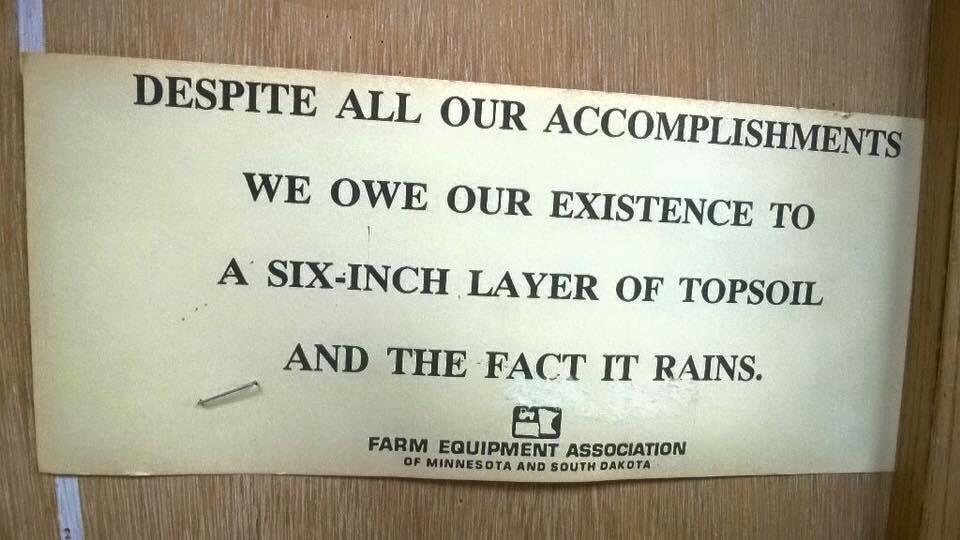
I have said this before on this Blog – but it is worth repeating – “Darwin always stated that the earthworm was the most important species on the planet”.

It seems to have taken most of us an age to get around to realising this, and to learn more about this vital role that worms carry out. 
  
One person who has known this for some time is our own GWCT soil specialist, Dr. Alistair Leake, who often quotes that research had shown an earthworm presence in soils of 400 per square metre could increase crop yields by up to 25%. They are also turning over the soil for me, without a penny being spent on diesel he often states, while grinning broadly!

Research has shown that earthworms boost plant growth by helping release nitrogen from the soil during their burrowing and feeding activities, which is otherwise locked away in soil organic matter or plant residue".

They also improve soil structure which enables better plant rooting, improve infiltration rates and moisture and their activities also stimulate microbe activity. They also carry out bio-control which reduces pests and diseases in soil. If you only have a few worms in the soil there will be an increase in surface run-off and potential erosion issues. 

A simple test you can do to find out how your earthworm numbers are faring, is to take a spade full of soil and see how many worms you can count. If at least 16 earthworms are totted up, then there will be an increased benefit, not only potentially in crop yields, but also through reduced water run-off – a very topical issue at present!

It is worth noting that worms can reach staggering numbers if the soil is in top class nick. If every man, woman and child in this country was a worm, we could fit them all into a good quality 70 acre grass field! 

 As Cilla would have said “That’s alorra, lorra worms!”


Tuesday, 12 January 2016

Alabama rot shakes the dog world

Keep a check on your dogs for signs of lesions

When you look after animals, there is always cause for concern if they become a “little off colour”, especially as they can’t tell you what the matter is, unlike children. Mind you, when I was a child, the assorted animals always grabbed far more attention than us children even when they were perfectly well, let alone if they were ill!

Hence I had to spend a whole day with a broken arm, having fallen out of a tree first thing in the morning while checking out a bird’s nest. It was not until the evening that I managed to get someone to listen to my winging and take me down to the doctor – who confirmed the break within seconds and sent me off to the plaster room!

Anyway, I digress! 

A fellow work colleague sent an e-mail around the other morning saying “When I got home from work last night my dog wasn't quite himself and wasn't able to get out of bed and I noticed a number of quite nasty lesions on his skin. After taking him to the vet they suspected he might have the early signs of Alabama Rot”.

The GWCT just happens to have a Vet working with us at the moment and he commented “It is thought that dogs can be exposed to this toxin during the winter months in wet muddy conditions (especially wooded areas). The toxin can cause skin lesions on the lower legs or feet and damage the kidneys, sometimes causing kidney failure. Advice is to wash mud off your dog after walking and to monitor for any unusual skin lesions. It is important to stress that this is very rare disease, but if you are at all concerned you should get your pet in to be checked”.

There is not a huge amount known about this disease, although the New forest does seem to be a stronghold for it, perhaps because so many dogs are exercised there. The map showing outbreaks of this disease does however cover most of England, so I think it is as well to keep a good look out for it over the next few months, as it does appear to be on the increase. It can and does quite often result in the dog’s kidneys failing, leading to death, however, as with most things, if you catch it early enough then the Vet can certainly help.

A useful site to read up more on this disease is:


Thursday, 7 January 2016

The key to solving the flooding issues? Answer – Farmers.

We need a radical rethink on the issue of flooding
I want to start by saying how my heart goes out to all those who have had their homes flooded – it must be so utterly soul destroying. Listening to their desperate pleas, as they stand in dirty brown sludge surrounded by wrecked furniture, demanding that more money should be spent on better flood defences, is of course a totally justified and understandable demand.

However, and it is a very big “however” in my opinion.

Although these barricades to protect property and people, do of course have a role in flood defence, they are just that – defences. They play no role whatsoever in getting to the bottom of the problem, namely, stopping the floods from occurring in the first place. Spending large amounts of the flood defence budget on diverting flood waters here and there, seems to me to be the ultimate false economy of going down the “sticking plaster solution”, even though electorally it gets politicians of the hook as they are seen to be doing something tangible.

With all indications from the climate change experts that extremes of weather are going to become far more frequent, surely it is time for a wholesale, radical rethink on this subject.

Writer and biologist Colin Tudge put it across extremely well at the Oxford Real Farming Conference when he said; “We can't control floods - or drought - unless we involve the farmers. The catchment area that picks up the rain is likely to be at least a thousand times larger than the area on which all that water is finally dumped. So one inch of rain on the surrounding hills becomes 1000 inches – more than 80 feet -- in the river, or in the high street if the river can’t cope”.

That sums up the whole issue in one paragraph in my opinion. This is where the money should be spent Mr. Cameron – on the wider countryside. Cameron might well retort – “OK clever dick, how?”
Well by looking at in-field cultivations systems, alleviating compaction, increasing organic matter in soils, avoiding bare soil over-winter by planting cover crops, holding back water by damming ditches or using sluice gates, creating barriers such as Beetle Banks across sloping fields, pinpointing where water run-off regularly occurs and addressing this by targeting strategic tree planting, whilst also paying farmers to allow flooding on their land rather than sending water on to someone else further downstream.

Take just one of these examples – increasing organic matter in soil, something that all farmers can start to address straight away. Generally, particularly on arable farmland, soil organic matter is fairly impoverished and is often making up only around 1 to 3 % (at best) of the soil’s make-up. A conservative estimate is that organic matter can hold four times its weight in water, so if a farmer can increase the organic matter in the soil by an additional 1.5%, they could reasonably be expected to hold in the region of another 225 tons of water per hectare, rather than watching it run away into the nearby ditch.

The GWCT’s Allerton project in Leicestershire is providing many answers to the problems that Government now face on this issue. Now is the time to make them part of future soil and water policy.  


Saturday, 19 December 2015

Book now for bird ID courses, so you don't miss out - as they are filling fast. We are counting on you!

What's that birdie? This lot know because they have attended a farmland bird ID course! 
Well, well, well! It is nearly time once again to dust those binoculars off and take part in the GWCT’s third “Big Farmland Bird Count”. Whether you took part last year or if it’s your first time, this is
your chance to see how numbers have changed or to find out what different species are around on your own farm, or indeed if you are not a farmer, then on a nearby farm (with permission of course!!).

Last year nearly a thousand farmers took part and recorded an amazing 127 species!  Farmers from every county in England participated and there were responses from Ireland, Scotland and Wales too. Very well done to the county of Norfolk as they had the most returns with 64 farmers completing the survey, closely followed by Yorkshire with 62. 

Yorkshire second – surely not! Now that has to be a challenge to those who farm in “God’s own country” – their words not mine!! (Norfolk farmers – don’t let them beat you this year as we will never hear the end of it!!). As for my own county of Hampshire – I have some chivvying to do – surely we can come top, both on the number of farmers counting and species recorded!

Guy Smith – well known farmer and NFU vice president says; “I often hear farmers grumble that while they are quietly proud of how much wildlife they have on their farms they get fed up with reports in the media that modern farming is bad for birds. I can understand the frustration but to my
mind the answer is, don't just be proud – be loud. So, come next February get the binoculars out, dust off the notepad, sharpen the pencil and get recording!”

So why am I shouting about the BFBC if it doesn't happen, as Guy says, until February? Well my little budding twitchers, I am giving you time to get some training in beforehand! No, not fitness training after Christmas's debauchery, but some preparation time before the big event, so that you can tell a Dunnock (little grey and brown job – LGBJ) from a Meadow Pipit (little brown job - LBJ).  

Yes, this is your chance to come on a farmland bird ID course before you go out to check up on what you have got on the farm. Let’s face it, some of these LBJ’s are just that and not a lot else, as they sit silently in a thorn bush or shuffle about in a stubble field.

But wait, this ID course will tell you all about the bird’s “Jizz” – a fabulous birding word that is used to describe what the bird does and how it behaves. How does it sit in that thorn bush – on its own or in a flock, in an upright way or horizontally, on top of the bush or skulking around at the base? How does it move about in the stubble field – does it hop, walk, shuffle or run!  

All these things help you slowly eliminate some birds and home in on others, eventually nailing the bird that you are looking at! Each course will also cover what different bird species need to over-winter successfully on your farm and give details of how you can help them do just that, by providing what they need. Indeed, once you know what species you have in your locality, then you can target your management directly at those birds.

So, how about signing up to one of these ID days that is happening near you – we have arranged 18 locations across the country, so there should be one not too far away. This will then enable you to strut, stride, skip or stomp, (depending on your personal jizz) around the farm for about half-an-hour, on one day between 6-14 February, with enormous confidence that you are noting down birds that you really have identified correctly with your newly learnt skills!

Finally, this year we have a superb new offer. Along with our very loyal sponsors BASF who enable us to hold these training days and the great BFBC event, if you complete all the relevant information and send your forms back to the GWCT, you will automatically be entered into a prize draw for a fantastic pair of SLC 8x42 binoculars, donated by Swarovski Optic. These are seriously good binoculars that will last you a lifetime.

Go on a training course AND win these superb binoculars and you will really have absolutely no excuse - any bird preening before you will prove to be an absolute walk in the park for you to ID!


To sign up to our Bird Identification Days being held in 18 locations across the country, or to download count forms, please visit: www.gwct.org.uk/BFBC or telephone: 01425 651000. 

Come on everyone - lets smash last year's totals!!


Sunday, 13 December 2015

Congratulations Paris. But now the real work starts.

Soil and water management; carrying on as we are currently, is not an option
So, with the bang of a gavel last Saturday evening, representatives of 195 nations reached a landmark accord that will, for the first time, commit nearly every country to lowering planet-warming greenhouse gas emissions to help stave off the most drastic effects of climate change. This is of course very encouraging news, however, only time will tell if collectively, humanity can deliver on this agreement.

Climate change is of course caused by a host of different reasons and is intricately linked to the way we manage and use the resources that the world offers us. If you just look at two such resources, soil and water, you can see that we need to change our ways big-time and rapidly.

A new report on soils published this month by the Sustainable Food Trust, is to put it bluntly, alarming. I have taken some extracts for you to read:

“Soil is a vital resource for the future of humanity. It needs to be protected and enhanced. Instead, more than half (52%) of all fertile, food-producing soils globally are now classified as degraded, many of them severely degraded (UNCCD 2015).

Throughout human history, at least twelve past civilisations have flowered on fertile soils and made huge advances, such as the development of written language, mathematics and financial systems, only to disappear over time as their soils progressively degraded and could no longer feed their populations.

These civilisations occupied, or depended on, defined geographical regions: the Sumerians in Mesopotamia, the Roman Empire’s exploitation of the once highly fertile soils of north Africa, parts of ancient Greece, China, Central America, India and elsewhere. The damage done to soils in these regions is still present today, but new civilisations were able to spring up elsewhere, converting forests and native grasslands to agriculture and thriving on the fertility that had built up over thousands of years in the soil.

Today, however, due to the global trade in food, the global adoption of exploitative farming methods and the extent to which forests and natural grasslands have already been converted to crop production, it is the entire global civilisation that is threatened by progressive soil degradation.

Research by the Economics of Land Degradation Initiative in 2015 calculated that soil degradation is costing between $6.3 and $10.6 trillion dollars per year globally, but these costs could be reduced by enhancing soil carbon stocks and adopting more sustainable farming methods.

A research group at Cranfield University estimated that in England and Wales soil degradation costs £1.33 billion annually. Half of this cost relates to loss of soil organic carbon (SOC), and the intensity of farming is a major cause of soil carbon loss.

Agriculture and the food we eat depend on soil. Under appropriate management soils are an infinitely renewable resource, while under inappropriate management they are effectively a very finite resource. Under natural conditions it can take 500 - 1,000 years to form an inch of soil from parent rock”. (I have highlighted this).

Here are a few statistics to ram the message home – if it really needs to be, any longer, that is. Recent estimates indicate that every year:
Soil degradation affects 1.9 billion hectares
12 million hectares (23 hectares a minute) of land is lost to food production
24 billion tonnes of fertile soil is irretrievably washed or blown away (3.4 tonnes for every human on the planet).

If you would like to read more from this report, go to:

Meanwhile, perhaps the most important world resource of all, water, is also causing major concerns.

Across the globe, reports reveal huge areas in crisis today as reservoirs and aquifers dry up. More than a billion individuals – one in seven people on the planet – now lack access to safe drinking water. The world faces a water crisis that will touch every part of the globe, a point that has been stressed by Jean Chrétien, former Canadian prime minister and co-chair of the InterAction Council. “The future political impact of water scarcity may be devastating,” he said. “Using water the way we have in the past simply will not sustain humanity in future.”

With expected increases in population, by 2030, food demand is predicted to increase by 50% (70% by 2050) (Bruinsma, 2009), while energy demand from hydropower and other renewable energy resources will rise by 60% (WWAP, 2009). These issues are interconnected – increasing agricultural output, for example, will substantially increase both water and energy consumption, leading to increased competition for water between water-using sectors.

The world runs on water. Clean, reliable water supplies are vital for industry, agriculture, and energy production. Every community and ecosystem on Earth depends on water for sanitation, hygiene, and daily survival.

Yet, around 700 million people in 43 countries suffer today from water scarcity.

By 2025, 1.8 billion people will be living in countries or regions with absolute water scarcity, and two-thirds of the world's population could be living under water stressed conditions. With the existing climate change scenario, almost half the world's population will be living in areas of high water stress by 2030, including between 75 million and 250 million people in Africa. In addition, water scarcity in some arid and semi-arid places will displace between 24 million and 700 million people.

So you can see that although the Paris agreement is all about “climate change” – if you lift off the lid and look in, it is in fact about so, so, much more. I have just highlighted two elements here. Let us all hope that it truly marks a monumental turning point in the way we treat the world’s resources, otherwise, the future really does not bear thinking about.


Thursday, 10 December 2015

Ramblings on Bramblings!

I think it going to be a good winter for spotting Bramblings, maybe even in your back garden! 

Last year, we had an enormous Beech tree mast supply in the UK – “mast” being the name of the Beech tree’s seed. Bramblings simply love this seed and large flocks will spend the winter foraging around under Beech trees, so accordingly they don’t really need to rely on our garden bird table hand-outs. I only occasionally saw a lone male visiting my garden last winter.

However, this year the Beech mast harvest has been quite small and already I have at least 6 Brambling visiting my garden on a daily basis.  So, what exactly does this bird look like, because to be honest, it could easily be over-looked and noted down as a common old Chaffinch!

Brambling are similar in size and shape to the chaffinch, and they do team up in the winter months with their close cousins, feeding together as a mixed flock. The noticeable difference is that the male has a dark head and appears to look like a rather “orangey” Chaffinch. The other clue to look out for is when they fly up and away from you, as they have a bright, really strikingly obvious white rump patch, so keep a good look out for this.

Bramblings are winter visitors to this country, as they breed in Scandinavia and Western Siberia. They come to our shores to escape the harsh continental winter, and turn up in particularly big numbers here, when snow and lack of food forces them to venture across the North Sea.

They particularly like to feed on the ground, but will also perch on feeders to eat various small seeds. They love sunflower seeds – in or out of their husks!! So I chuck some mixed corn and a few sunflower seeds onto the ground each morning and they fly down and are pecking around before I am even back in the house! 
   
To help you know what you are looking out for, I have put up a picture of both the Chaffinch and Brambling – so keep an eye open for them and do let me know if you a lucky enough to get a visit from this great little finch in your garden.


The "orangey" male Brambling

The much more "pinky" male Chaffinch