Sunday, 13 March 2016

Bijou thatched cottages sought by beetles

A Scarlet Malachite Beetle

I do like discovering a “new” species that I have been blissfully unaware of, until someone happens to mention it and sets me off to find out more about it! The Scarlet malachite beetle Malachius aeneusis is just such a species, a beautiful red and green insect found in only three counties (Hampshire, Essex & Hertfordshire) on just eight sites in the UK.

The beetle emerges in early May and will be out and about until the middle of June. It used to be widespread in the southern half of the country, but is believed to have declined enormously, although it may well be lurking in undiscovered places, waiting for its whereabouts to be revealed by an eagle-eyed naturalist.

The most distinctive things to look for when identifying the scarlet malachite beetle is its bronze-green coloured body and section where the two wing cases meet, its bright red wing cases and it’s yellow face. It can be found feeding on a range of plants, although the buttercup does seem to be a particular favourite.

It has quite a strange life cycle does the scarlet malachite, but Ian Hughes, a freelance naturalist with support from Natural England and Buglife, is on a mission to secure the future of the handsome beetle, by shedding more light onto what it gets up to during the year.

Ian explains, “I do believe that the loss of meadow habitat in this country is partly responsible for the beetle’s dramatic decline and this is one of the elements of their life-cycle that I am investigating. They appear to need thatched properties to lay their eggs, and once hatched in early May they need a direct flight path from the thatch to a meadow habitat where they need to feed on specific meadow flowers and grasses and then breed.”

It might also be that modern thatched roofs may offer a less good habitat than they used to, perhaps because they are kept in better condition than in days gone by. Also quite a lot of thatching straw is imported from Poland nowadays and most of it is treated with chemicals to help it last longer.

So, Ian is installing small but perfectly formed thatched ‘beetle cottages’ on sites where the beetle once thrived, in the hope that they may to choose to lay their eggs there. Not only should this give the beetles exactly what they require, but also help Ian to study the beetle at close quarters, which is not the case normally, as he can’t clamber around over people’s houses!

To help secure the future of this threatened species, Natural England has also come to the rescue by providing advice and financial support through its Innovation Fund. David Andrews, Natural England’s adviser in the New Forest has been supporting Ian and said, “The beetle is a national priority species and therefore features in Natural England’s species recovery plan.

“We would urge people to go out and look out for the beetle this spring and early summer so that we can assess the current state of play for this beetle in Britain and potentially find previously unknown territories.  It is a stunning and unmistakable looking beetle and it seems to be clinging on in just a tiny portion of its former range. It could be that with the help of the public and landowners we might uncover other areas where the beetle is surviving. This would be a fantastic discovery and could make a massive difference to their survival.”


To take part in the survey, please visit Buglife’s website at www.buglife.org.uk


Potential Scarlet Malachite beetle residence!


Wednesday, 3 February 2016

Big farmland Bird Count (BFBC), 6th - 14th February - don't miss out!!


Budding Birders on the Ovebury estate bird ID training day
Yesterday, I ran one of the 17 bird ID days that are being held across the country prior to the Big Farmland Bird count. This particular day was held on the Ovebury estate situated on the Gloucestershire/Worcestershire border near Tewkesbury, by kind invitation of Penelope Bossom.

This delightful estate has an equally charming estate staff to go with it! I was joined by estate manager, Jake Freestone (known to many of you I’m sure because of his prowess as a blogger/tweeter!), head keeper Paul Gillett and office based staff Claire, Becky and Ros – who all combined into a force to be reckoned with!

From homemade chocolate brownies to a delicious lunch and a walk already planned out for me – I embarrassingly had to do very little to make the day a success – even the weather was dry and sunny! So my thanks go out to all of them.

We spotted 28 species: Mallard, Coot, Heron, Robin, Dunnock, Wren, Pied wagtail, Blackbird, Song thrush, Redwing, Fieldfare, Rook, Jackdaw, Carrion Crow, Magpie, Raven, Buzzard, Sparrowhawk, Yellowhammer, Goldfinch, Linnet, Chaffinch, Skylark, Blue tit. Great tit, Long-tailed tit, Pheasant and Red-legged partridge.  Not bad for a chattering, rambling group of mixed bird ID skills!

Don’t forget – the big week approaches! We are asking people to spend 30 minutes on any one day between the 6th and 14th February, recording the species and number of birds seen on one particular area of the farm.

Nearly (but not quite!) a 1,000 farmers, managing nearly one million acres of UK farmland, took part in the 2015 count. We just have to beat that 1,000 total this year – so please dust off those binocs and get out there next week!

Not only do I want to thank all the farmers who have allowed us to hold these bird ID days on their farms, but also to all the various organisations that have helped us to put on these ID days and also promoted the BFBC across a wide range of media.

Finally, we could not have done any of this had it not been for our main sponsor – BASF and their ever enthusiastic, environmental specialist, Graham Hartwell. 

So a huge thank you from Jim Egan (who actually does all the organisational work) and myself and all at the GWCT – we most certainly could not do it without all of you! 

Here’s to a very successful 2016 BFBC next week! I will let you know how it goes!


Monday, 25 January 2016

Secretary of State Liz Truss visits farmer group at Selborne


I have chatted on this blog (16th November 2015) about the great work that the Selborne Landscape Partnership have been achieving, so it was a real boost to all those concerned to have a visit last week from the Secretary of State for Environment, Food and Rural Affairs – Liz Truss. She had heard all about these various farmer cluster groups, which have been formed around the country so that they can manage the countryside on a “landscape scale”, and specifically requested to come down to Hampshire and find out more.

We started off by meeting in local farmer Kate Faulkner’s kitchen, for a cup of coffee and an up-date on some of the activities that the group is achieving.

The highlight, amongst many different projects that are being started by the group, has to be the Harvest mouse story. 

As Gilbert White, the naturalist writer who lived in Selborne, was the first person to identify the Harvest mouse as a separate species, makes this area the “home” of this delightful little mouse. There was only one old record locally in recent times (1999) for this species, and that was on a nature reserve, not out on the farmland where White would have found them. 

The farmers had not seen any for a long time either, so to all intents and purpose, this iconic little mouse had apparently been lost. White would undoubtedly have found that incredibly hard to believe, as it was such a common little mammal in his day.

Fast forward 18 months. 

Volunteers, including the farmers themselves, have been busy surveying the 28 Km squares that surround the village and almost unbelievable, have located 472 Harvest mouse nests, showing that the species is still alive and well and actually, still fairly common!!

We then walked out onto the farm in pouring rain, which was a shame as we all got a good soaking! It says a lot about the minister though, as she wanted to see and talk about everything despite the weather and asked lots of questions, appearing to be genuinely fascinated about what the farmers were collectively achieving.

Liz Truss certainly appears to think that this landscape approach to managing the countryside is the way forward, and now needs to consider ways of rolling this scenario out over the whole country.

How refreshing that it is the farmers themselves who are guiding the way forward and that Government are taking note.   Very inspirational!          

"Lead farmer" William Woolmer explains how diverse the area is to Liz Truss, while farmer Kate Faulkner holds the map 


Rob Nicholls of the South Downs National Park (SDNP), shows Liz a Harvest mouse nest.


A soggy group! From left to right: Nick Heasman (SDNP), farmers Kate Faulkner & William Woolmer, Me, Liz Truss, James Phillips and Hannah Thacker (NE) and Rob Nicholl (SDNP)


Tuesday, 19 January 2016

Worms, worms, glorious worms!

"Thought for the day" -  maybe with added worms! 
I read with interest the headline “monster worms” have been found on the island of Rum off the west coast of Scotland – Malt whisky induced Anacondas I thought to myself!

They have indeed found some fairly huge earthworms having said that. These brutes measure up to forty centimetres (1.3 ft) long and weigh in at twelve and a half grams, rather than the more normal four or five grams.

Dr. Kevin Butt, who has been studying these worms, says that he believes they have blossomed due to rich soil and a lack of predators. Rum worms are bigger than average due to their remote, undisturbed location, with good quality soil and for the fact that the island also lacks predators such as badgers, moles, hedgehogs and foxes which would usually gobble the worms before they had chance to grow into monsters.

Unlike most animals, which stop growing once they reach an adult size, earthworms keep on growing if left to their own devices and can surprisingly live for at least 20 years or so if nothing eats them.

The spotlight has been turned onto earthworms lately, not just because of these giant Scottish ones, but also because of the important role that trillions of ordinary, humble worms play every day.

I have said this before on this Blog – but it is worth repeating – “Darwin always stated that the earthworm was the most important species on the planet”.

It seems to have taken most of us an age to get around to realising this, and to learn more about this vital role that worms carry out. 
  
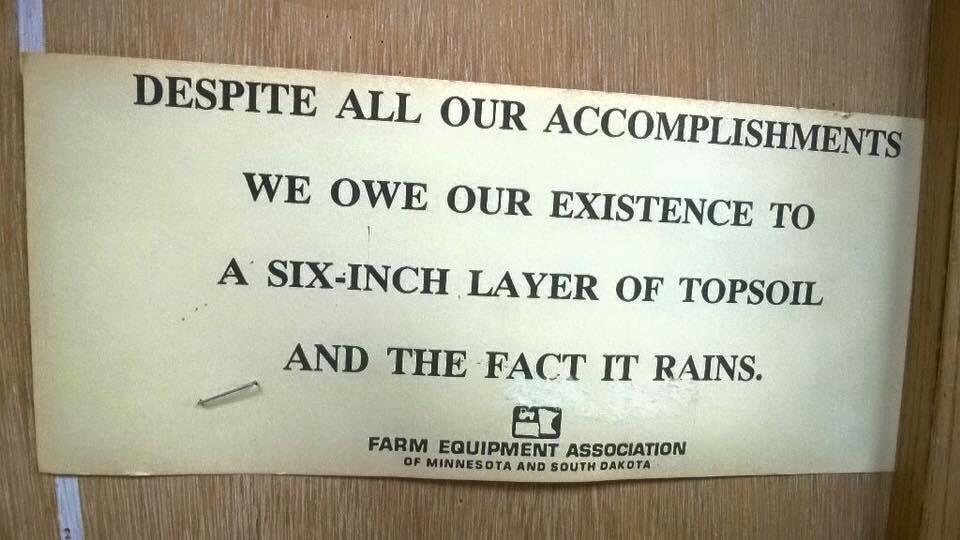
One person who has known this for some time is our own GWCT soil specialist, Dr. Alistair Leake, who often quotes that research had shown an earthworm presence in soils of 400 per square metre could increase crop yields by up to 25%. They are also turning over the soil for me, without a penny being spent on diesel he often states, while grinning broadly!

Research has shown that earthworms boost plant growth by helping release nitrogen from the soil during their burrowing and feeding activities, which is otherwise locked away in soil organic matter or plant residue".

They also improve soil structure which enables better plant rooting, improve infiltration rates and moisture and their activities also stimulate microbe activity. They also carry out bio-control which reduces pests and diseases in soil. If you only have a few worms in the soil there will be an increase in surface run-off and potential erosion issues. 

A simple test you can do to find out how your earthworm numbers are faring, is to take a spade full of soil and see how many worms you can count. If at least 16 earthworms are totted up, then there will be an increased benefit, not only potentially in crop yields, but also through reduced water run-off – a very topical issue at present!

It is worth noting that worms can reach staggering numbers if the soil is in top class nick. If every man, woman and child in this country was a worm, we could fit them all into a good quality 70 acre grass field! 

 As Cilla would have said “That’s alorra, lorra worms!”


Tuesday, 12 January 2016

Alabama rot shakes the dog world

Keep a check on your dogs for signs of lesions

When you look after animals, there is always cause for concern if they become a “little off colour”, especially as they can’t tell you what the matter is, unlike children. Mind you, when I was a child, the assorted animals always grabbed far more attention than us children even when they were perfectly well, let alone if they were ill!

Hence I had to spend a whole day with a broken arm, having fallen out of a tree first thing in the morning while checking out a bird’s nest. It was not until the evening that I managed to get someone to listen to my winging and take me down to the doctor – who confirmed the break within seconds and sent me off to the plaster room!

Anyway, I digress! 

A fellow work colleague sent an e-mail around the other morning saying “When I got home from work last night my dog wasn't quite himself and wasn't able to get out of bed and I noticed a number of quite nasty lesions on his skin. After taking him to the vet they suspected he might have the early signs of Alabama Rot”.

The GWCT just happens to have a Vet working with us at the moment and he commented “It is thought that dogs can be exposed to this toxin during the winter months in wet muddy conditions (especially wooded areas). The toxin can cause skin lesions on the lower legs or feet and damage the kidneys, sometimes causing kidney failure. Advice is to wash mud off your dog after walking and to monitor for any unusual skin lesions. It is important to stress that this is very rare disease, but if you are at all concerned you should get your pet in to be checked”.

There is not a huge amount known about this disease, although the New forest does seem to be a stronghold for it, perhaps because so many dogs are exercised there. The map showing outbreaks of this disease does however cover most of England, so I think it is as well to keep a good look out for it over the next few months, as it does appear to be on the increase. It can and does quite often result in the dog’s kidneys failing, leading to death, however, as with most things, if you catch it early enough then the Vet can certainly help.

A useful site to read up more on this disease is:


Thursday, 7 January 2016

The key to solving the flooding issues? Answer – Farmers.

We need a radical rethink on the issue of flooding
I want to start by saying how my heart goes out to all those who have had their homes flooded – it must be so utterly soul destroying. Listening to their desperate pleas, as they stand in dirty brown sludge surrounded by wrecked furniture, demanding that more money should be spent on better flood defences, is of course a totally justified and understandable demand.

However, and it is a very big “however” in my opinion.

Although these barricades to protect property and people, do of course have a role in flood defence, they are just that – defences. They play no role whatsoever in getting to the bottom of the problem, namely, stopping the floods from occurring in the first place. Spending large amounts of the flood defence budget on diverting flood waters here and there, seems to me to be the ultimate false economy of going down the “sticking plaster solution”, even though electorally it gets politicians of the hook as they are seen to be doing something tangible.

With all indications from the climate change experts that extremes of weather are going to become far more frequent, surely it is time for a wholesale, radical rethink on this subject.

Writer and biologist Colin Tudge put it across extremely well at the Oxford Real Farming Conference when he said; “We can't control floods - or drought - unless we involve the farmers. The catchment area that picks up the rain is likely to be at least a thousand times larger than the area on which all that water is finally dumped. So one inch of rain on the surrounding hills becomes 1000 inches – more than 80 feet -- in the river, or in the high street if the river can’t cope”.

That sums up the whole issue in one paragraph in my opinion. This is where the money should be spent Mr. Cameron – on the wider countryside. Cameron might well retort – “OK clever dick, how?”
Well by looking at in-field cultivations systems, alleviating compaction, increasing organic matter in soils, avoiding bare soil over-winter by planting cover crops, holding back water by damming ditches or using sluice gates, creating barriers such as Beetle Banks across sloping fields, pinpointing where water run-off regularly occurs and addressing this by targeting strategic tree planting, whilst also paying farmers to allow flooding on their land rather than sending water on to someone else further downstream.

Take just one of these examples – increasing organic matter in soil, something that all farmers can start to address straight away. Generally, particularly on arable farmland, soil organic matter is fairly impoverished and is often making up only around 1 to 3 % (at best) of the soil’s make-up. A conservative estimate is that organic matter can hold four times its weight in water, so if a farmer can increase the organic matter in the soil by an additional 1.5%, they could reasonably be expected to hold in the region of another 225 tons of water per hectare, rather than watching it run away into the nearby ditch.

The GWCT’s Allerton project in Leicestershire is providing many answers to the problems that Government now face on this issue. Now is the time to make them part of future soil and water policy.